
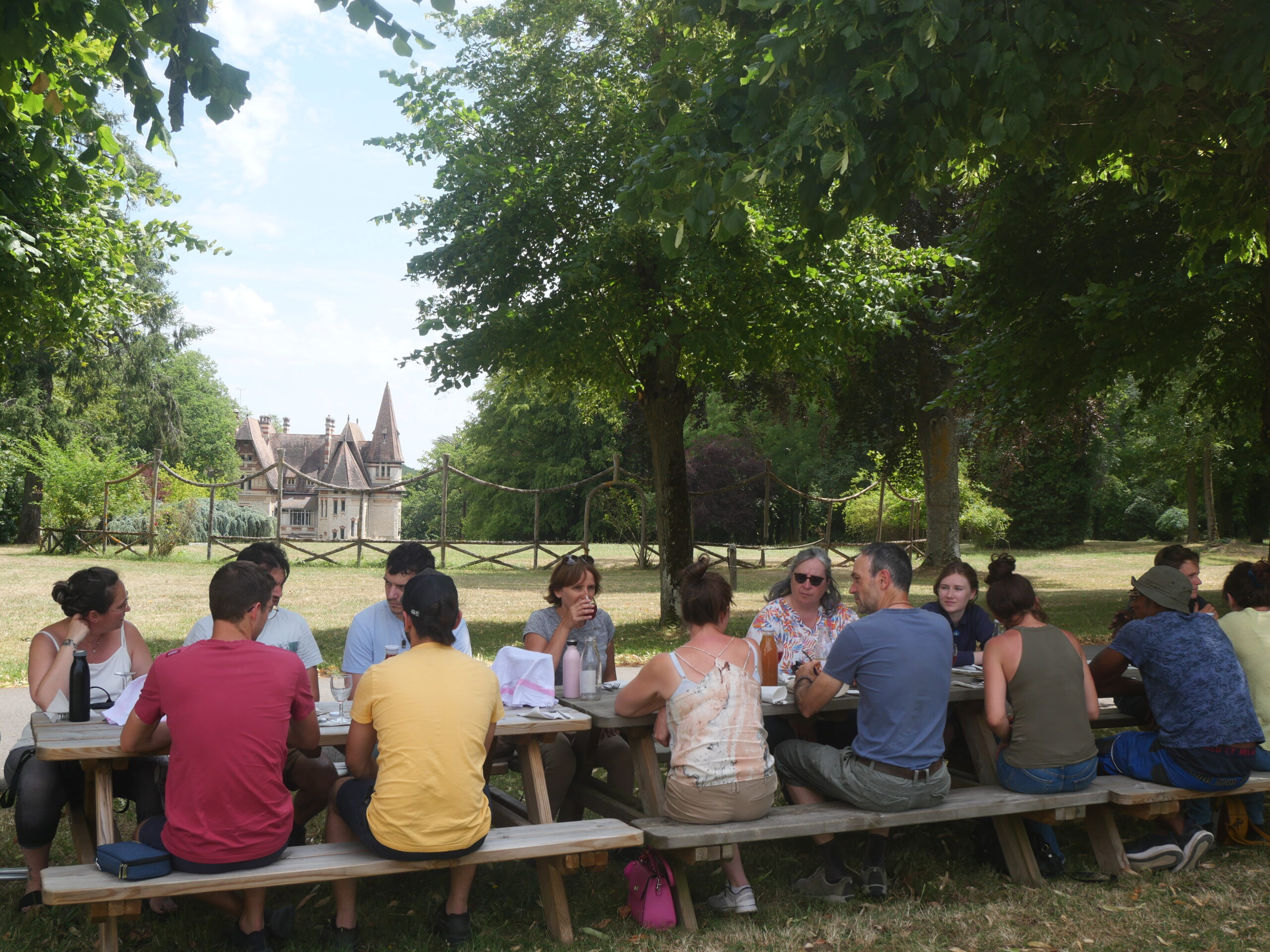
Employees become shareholders of Novabiom
This was a request that several employees had been making through the Works Council for the past few years: to join the Novabiom project by becoming shareholders.
To mark the company’s 20th anniversary, the process is now complete: interested parties were able to subscribe to Novabiom shares during a private capital increase.
For long-standing shareholders and the management team, the opening of the capital is a recognition of the commitment of the company’s employees. It also represents a further step toward enhancing team engagement and motivation by giving those who wish to do so the opportunity to get involved in Novabiom in a different way. The opening of the capital also provided an opportunity for new discussions about the company’s overall operations and governance.
A meaningful project
For employees, becoming a shareholder was an opportunity to “better understand the company’s strategies and the challenges it faces” and to play a direct role in discussions at general meetings. “It allows us to become more involved in how the company operates and to understand it better.” Thus, for some people, becoming a shareholder is no longer “just being an employee, but becoming a partner in the company’s vision”; it is “supporting the company and investing,” “because we strongly believe in Novabiom and care deeply about the company’s mission.” “It’s a continuation of my commitment to Novabiom, and it’s also rewarding: in a way, Novabiom recognizes my involvement.” And finally, it’s an opportunity to “get a foot in the door as a shareholder.”
The offering was a success, with most employees subscribing to Novabiom shares, much to the delight of the company’s existing shareholders.
[Novabiom is a simplified joint-stock company with capital divided among 25 partners, most of whom are farmers operating in various regions of France. As a mission-driven company, Novabiom’s purpose is to “create high-quality, eco-friendly miscanthus solutions rooted in local communities, in collaboration with farmers.”]