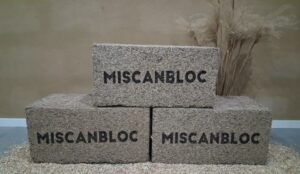

Miscanthus-based bioproducts: a carbon sink confirmed by a highly favorable miscanthus LCA
Miscanthus-based bioproducts: a carbon sink confirmed by a highly favorable miscanthus LCA
The French Miscanthus Interprofessional Association (IFM), represented by Manoël Couprie (Novabiom), participated in the upstream life cycle assessment (LCA) project for miscanthus, focusing on the cultivation and production stages.
The project was carried out in several phases: data collection, calculation steps, and finally a critical review of the results. This critical review will enable the LCA results to be integrated into the “Agribalyse” life cycle inventory database. This work was funded by ADEME, the BiomisG3 association, and IFM. It was carried out by FRD Codem and Agro-Transfert Ressources et Territoires for the LCA, and by Arvalis for the critical review.
The results confirm that miscanthus acts as a “carbon sink,” storing carbon in arable soil: 1 metric ton of raw miscanthus chips with 15% moisture content at the farm gate results in a net storage of 83.7 kg ofCO2 equivalent.
This corresponds to a net storage of approximately 1 metric ton ofCO2 equivalent per hectare per year for a miscanthus plot with an annual yield of 13 metric tons gross.
When the carbon sequestered in miscanthus chips (biogenic carbon) is taken into account, carbon storage is much higher: 1 metric ton of miscanthus chips (raw material) with 15% moisture content at the farm gate results in a net storage of 1.6 metric tons ofCO2 equivalent.
These results are currently being incorporated into the Agribalyse database. They will be available to all stakeholders wishing to conduct a life cycle assessment (LCA) of bioproducts containing Miscanthus, thereby enabling them to take advantage of this plant’s carbon benefits.